Using VR Games at Live Events to Communicate Brand Messages
Trade shows and conferences are crowded, competitive environments. One of the most effective ways to cut through the noise is by turning brand messaging into an interactive VR game.
Trade shows and conferences are crowded, competitive environments. brands are fighting not just for attention — but for memory.
One of the most effective ways to cut through the noise is by turning brand messaging into an interactive VR game. When done well, VR games transform passive visitors into active participants, dramatically increasing engagement, recall, and emotional connection.
Why Traditional Booths Struggle
Most event experiences rely on:
- Static displays
- Printed messaging
- Short sales conversations
The problem? The human brain is not wired to retain passive information in busy, high-stimulus environments like trade shows.
Studies in cognitive psychology consistently show that active participation leads to significantly higher memory retention than reading or listening alone.
Why VR Games Work So Well at Events
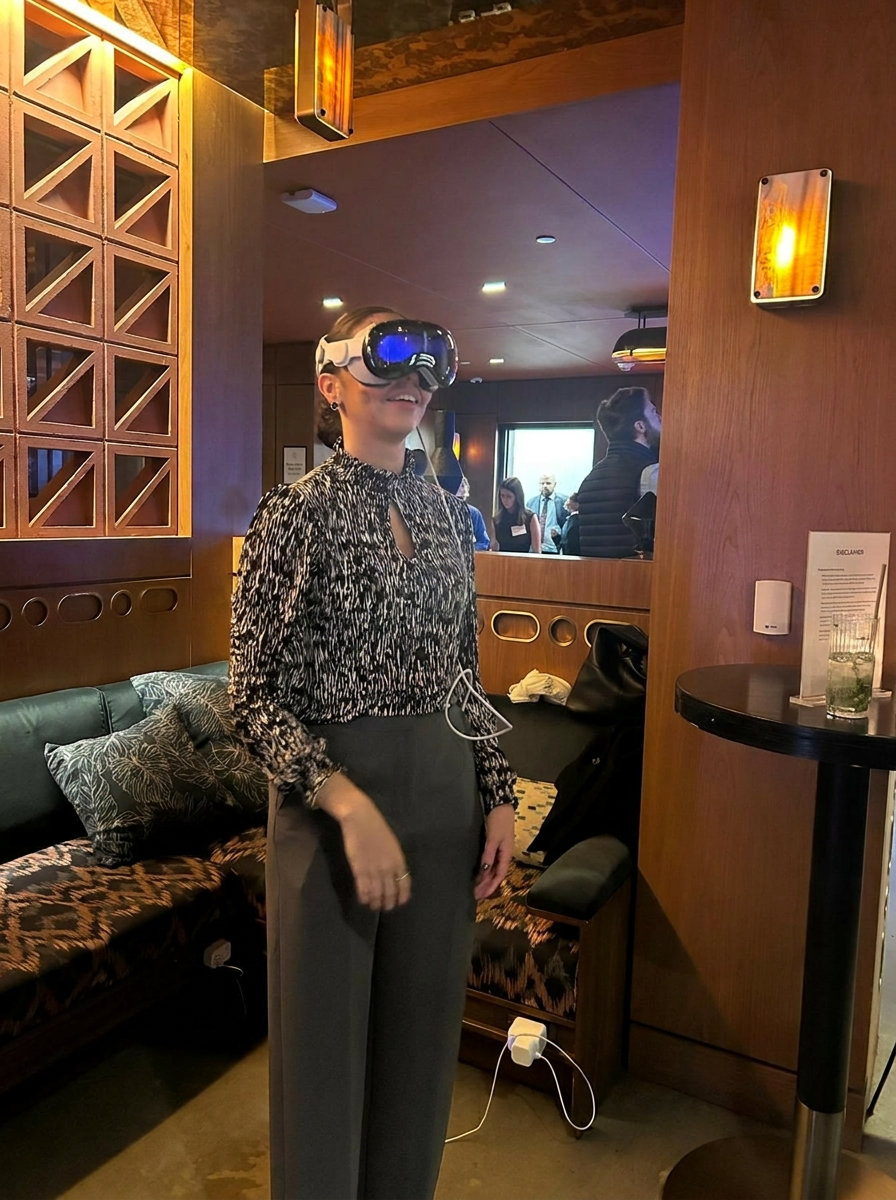
VR games combine three powerful engagement drivers:
1. Active Learning
Instead of being told a message, attendees experience it. They make decisions, solve problems, and interact with your brand narrative.
This activates multiple areas of the brain simultaneously — visual, spatial, motor, and emotional.
2. Emotional Engagement Improves Recall
Neuroscience research shows that experiences tied to emotion are far more likely to be remembered.
VR naturally creates:
- Curiosity
- Excitement
- Surprise
- A sense of achievement
This emotional layer dramatically increases long-term brand recall compared to traditional demos.
3. Storytelling Through Interaction
VR games allow brands to embed messaging into the mechanics of the experience itself.
For example:
- Completing challenges that represent real business problems
- Unlocking environments that visualise complex products or services
- Making choices that reflect your value proposition
Instead of explaining what you do, you let people live it.
The Science Behind VR and Memory
Research in experiential learning and embodied cognition shows that:
- People remember up to 90% of what they do, compared to around 10–20% of what they read or hear
- Spatial memory (used heavily in VR) is one of the strongest memory systems in the brain
- Multisensory experiences create more neural connections, strengthening recall over time
In short: VR turns brand messages into memories.
Examples of VR Games at Live Events
Effective VR event games don't need to be complex. The best ones are focused and purposeful.
Examples include:
- A short VR challenge that mirrors a customer pain point
- A simulated environment showing the impact of your solution
- A timed task that encourages friendly competition and repeat engagement
These experiences typically last 2–5 minutes, making them ideal for high-traffic events.
Business Benefits Beyond the Booth
Well-designed VR games deliver measurable ROI:
- Increased booth dwell time
- Higher quality sales conversations
- Stronger post-event brand recall
- Warmer follow-up meetings after the event
Attendees don't just remember your brand — they remember how it made them feel.
Final Thoughts
In a world where attention is scarce, immersive VR games give brands a powerful advantage.
They turn complex messages into simple experiences. They turn visitors into participants. And they turn brief encounters into lasting brand impressions.
For brands looking to stand out at trade shows and conferences, VR games are no longer a novelty — they're a strategic tool.