Meta Smart Glasses: From the Orion Prototype to What Brands Can Use Today
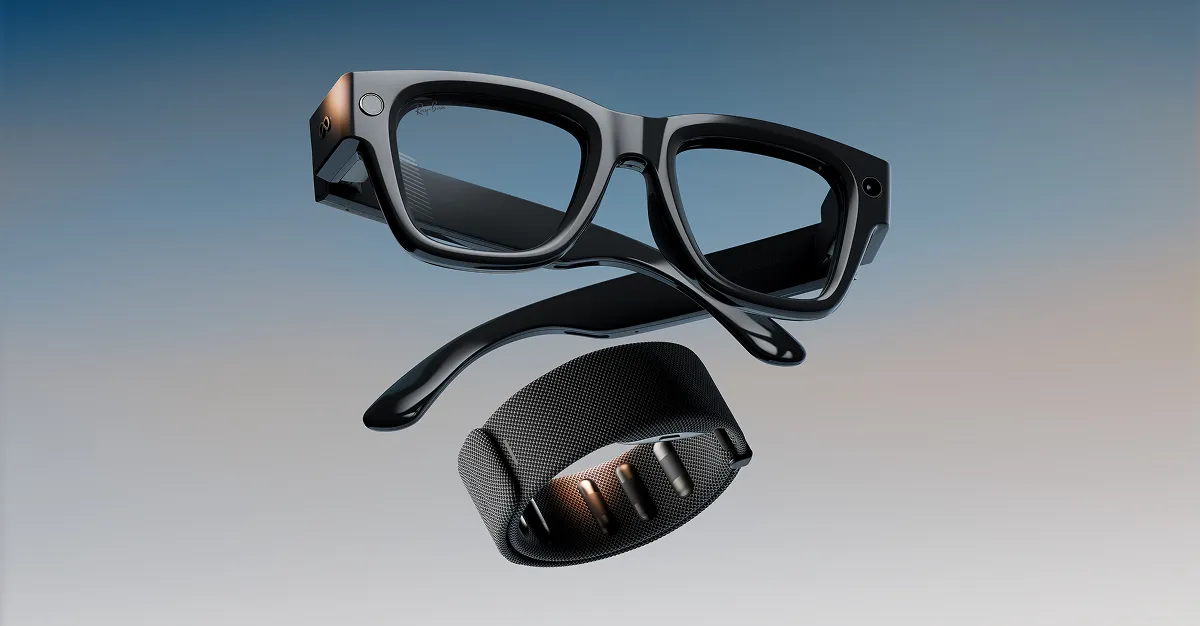
Meta's Orion prototype shows the long-term future of true augmented reality, while the Ray-Ban Display glasses represent the first practical step brands can experiment with today — combining AI, camera-based context, and heads-up display into a wearable event tool.
Augmented reality has been discussed in the context of events for over a decade. Until recently, however, it has largely lived in prototypes, demos, and future roadmaps rather than practical deployment.
Meta's smart glasses journey helps clarify where AR is heading — and, more importantly, what brands can realistically use today.
There are two distinct parts to this story:
- Orion, Meta's unreleased AR glasses prototype
- Meta Ray-Ban Display glasses, the product now available for real-world use
Understanding the difference between the two reveals why this moment matters for immersive events.
The Orion Prototype: The Long-Term AR Vision
Orion is Meta's internal and developer-facing AR glasses prototype. It represents the company's vision for "true" augmented reality — lightweight glasses capable of placing digital content directly into the user's field of view, anchored to the physical world.
In concept, Orion enables:
- Persistent digital objects mapped to real environments
- Rich spatial overlays that interact with physical space
- Continuous, context-aware digital assistance
However, Orion is not a consumer product. The technology required to deliver full mixed reality in a glasses form factor — optics, processing, battery life, and cost — is still evolving. As a result, Orion remains a prototype designed to define direction rather than immediate deployment.
For event marketers, Orion is best understood as a signal of where immersive experiences are going, not what can be rolled out today.
What's Available Now: Meta Ray-Ban Display Glasses
The Meta Ray-Ban Display glasses are different. They are not a future concept — they are a shipping product.
Rather than full spatial AR, these glasses focus on display-led augmentation: placing useful digital information into the wearer's line of sight while keeping them fully present in the physical world.
This distinction is critical for events.
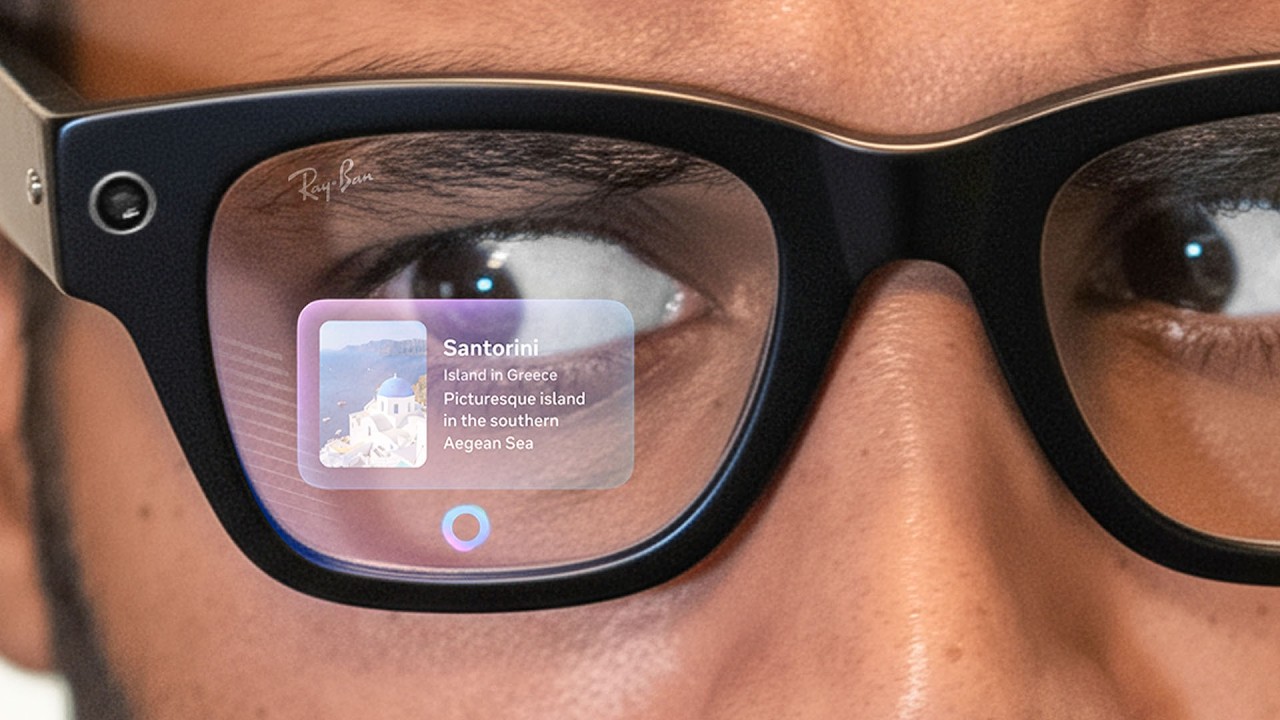
The Ray-Ban Display glasses combine:
- A discreet heads-up display embedded in the lens
- A built-in camera for visual context
- AI-driven interpretation and assistance
- Hands-free interaction
They don't replace reality. They enhance it.
Why Display-Based AR Matters at Events
events are social, conversational environments. Technologies that isolate users — even briefly — can interrupt flow and reduce scalability.
Display glasses work because they support, rather than disrupt, real-world interaction.
Attendees can:
- Maintain eye contact during conversations
- Walk a booth while receiving contextual information
- Absorb content without holding a device or stepping into a headset
This makes display-based AR uniquely suited to trade shows, conferences, and executive briefings.
The Role of the Camera: Context Is the Breakthrough
The integrated camera is not just for capturing photos. It enables contextual awareness.
By seeing what the wearer sees, the system can:
- Identify products, signage, or environments
- Trigger relevant information automatically
- Support visual recognition and interpretation
At events, this means digital content can respond to physical cues — the product someone is standing in front of, the space they are walking through, or the demo they are watching.
Context removes friction. Attendees no longer need to search, tap, or scroll to find information.
The AI Component: From Information to Understanding
The most valuable element of these glasses is not the display itself — it is the AI layer behind it.
AI enables:
- Real-time translation and live captions for global audiences
- On-demand explanations of what the user is looking at
- Intelligent prompts that adapt to conversation and environment
Instead of static messaging, brands can deliver adaptive explanations — information that changes based on attention, intent, and context.
This is especially powerful in environments where products and services are complex and time is limited.
Practical Use Cases at Events
The strongest applications are simple and focused:
- Guided product walkthroughs triggered by visual recognition
- Live captions or translations during demos and meetings
- Contextual prompts that support sales conversations
- Visual reinforcement of key points without interrupting discussion
These are short, lightweight interactions — measured in seconds, not minutes — designed to support, not replace, human engagement.
Orion vs Ray-Ban Display: A Continuum, Not a Choice
It is useful to think of these devices as points on the same roadmap.
Orion represents the destination: fully spatial, persistent AR integrated into everyday life.
Ray-Ban Display glasses represent the bridge: a practical, deployable step that introduces AI-driven augmentation without waiting for full mixed reality to arrive.
Brands that experiment now are not chasing novelty. They are building the skills, content strategies, and experience design principles that will carry forward as hardware evolves.
Final Thoughts
The shift from screens to wearable display is subtle, but significant.
By combining camera-based context, AI interpretation, and hands-free display, Meta's current smart glasses point toward a new category of event experience — one that enhances understanding without demanding attention.
For brands focused on education, clarity, and memorability, this is not about replacing booths or demos.
It's about making every interaction easier to understand, easier to remember, and more valuable in the moment.