Looking Glass Holograms: From Futuristic Display to Practical Event Signage for Brands
Looking Glass hologram displays turn traditional booth signage into dimensional, attention-holding visual experiences — offering brands a practical way to increase dwell time, memorability, and perceived innovation without isolating attendees in headsets.
Holograms have long been associated with science fiction, product launches, and large-scale spectacle.
Today, however, holographic display technology has reached a point where it can function as practical, deployable booth signage for events.
Looking Glass Factory's light field displays represent one of the most accessible ways brands can introduce true 3D visuals into real-world environments — without headsets, glasses, or complex installations.
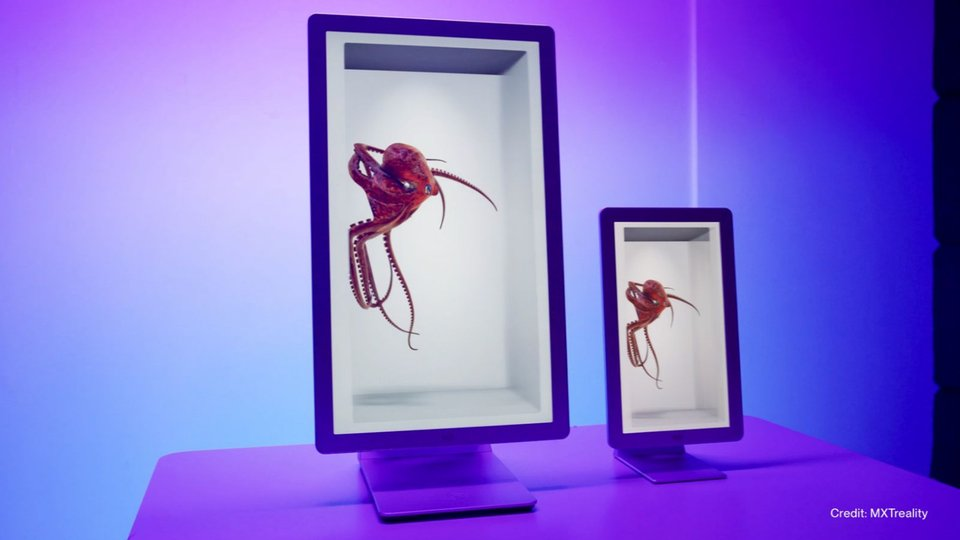
What Makes Looking Glass Different
Most "3D" displays at events are still flat screens simulating depth.
Looking Glass uses light field display technology to project content with real spatial depth. Viewers can move their head and see different perspectives of the object — as if it exists behind the glass.
There are no wearables. No instructions. No friction.
Multiple people can view the holographic content simultaneously, making it inherently social — which is critical in environments.
This is not virtual reality. It is dimensional signage.
Why This Matters for Booth Design
At trade shows, your first challenge is stopping traffic.
Your second challenge is keeping it.
Holographic signage supports both.
A floating 3D product model rotating in space naturally draws attention from a distance. But more importantly, it invites closer inspection.
Instead of a looping promo video, brands can showcase:
- A 3D product exploded view
- A miniature architectural model
- A layered data visualization
- A dimensional logo or brand animation
- A holographic spokesperson introduction
These are passive experiences — measured in seconds — that spark curiosity and open conversations.
The display becomes a conversation starter rather than a presentation tool.
Attention Without Isolation
One of the biggest limitations of immersive event tech is scalability.
VR headsets isolate users. AR demos require devices. Interactive kiosks create queues.
Looking Glass avoids these barriers.
Because the hologram is viewable by groups, it enhances the booth environment rather than fragmenting it.
Attendees can:
- Maintain eye contact
- Discuss what they're seeing
- Engage socially around the display
- Move naturally without onboarding
In environments, this matters more than spectacle.
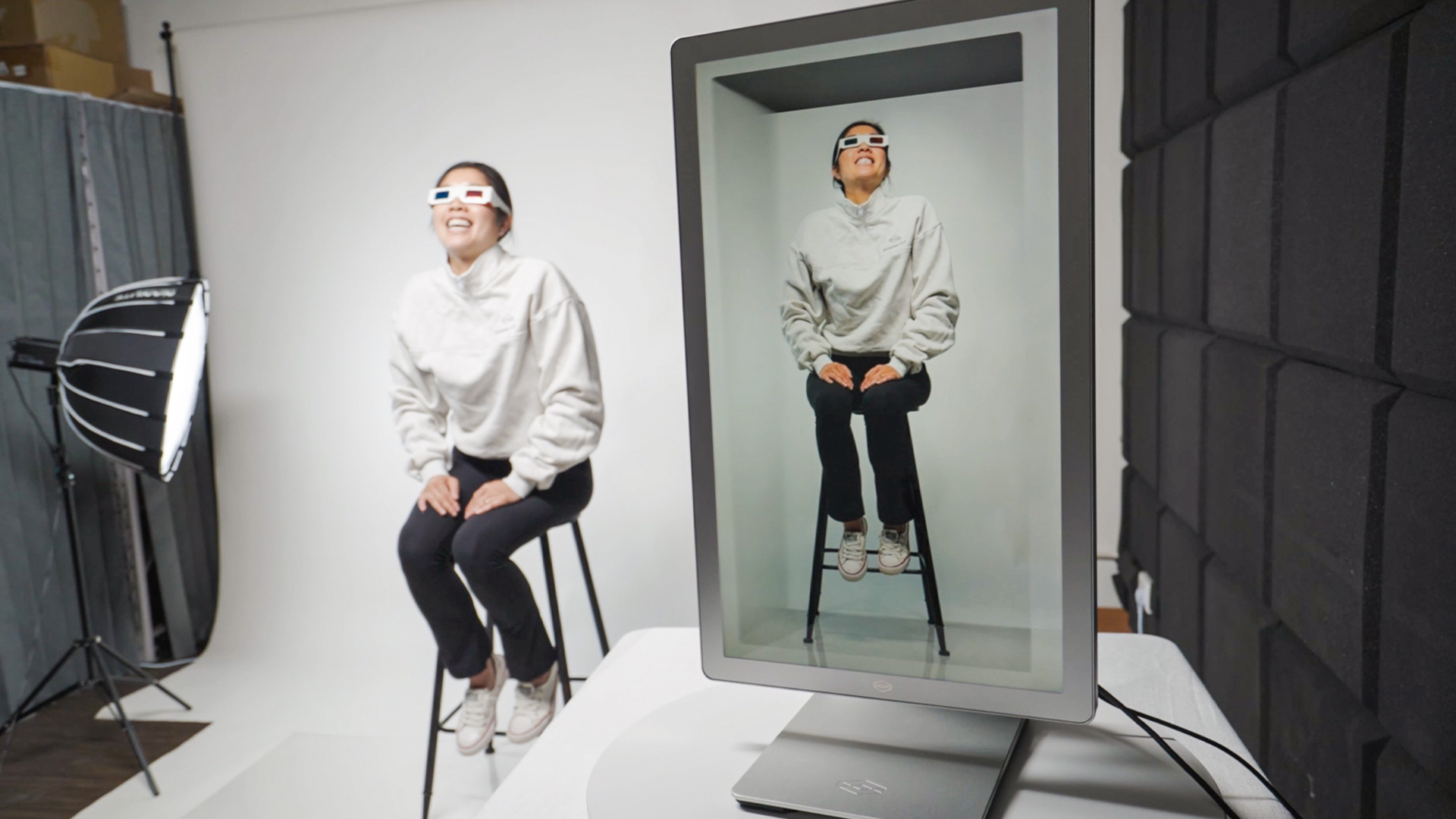
The Practical Advantage: Size and Portability
Looking Glass offers multiple display sizes, from smaller desktop units to large-scale installations.
This flexibility allows brands to:
- Integrate holograms into standard booth builds
- Replace static digital signage
- Highlight flagship products in 3D
- Create premium focal points in executive meeting spaces
Importantly, these displays fit into existing event infrastructure. They do not require dark rooms, specialized stages, or elaborate rigging.
They operate like high-impact digital signage — but dimensional.
Ideal Use Cases at Events
The strongest applications are focused and intentional:
- Hero product visualization in 3D
- Pre-demo attention capture loops
- Miniature environment simulations
- Layered data storytelling
- Brand identity moments with depth
These are short, repeatable loops designed to attract and intrigue — not long-form content experiences.
The goal is simple: Stop. Look. Engage. Talk.
Holographic Signage as a Brand Signal
There is also a psychological component.
Using holographic display technology signals innovation. It subtly communicates that a brand is forward-thinking, technologically fluent, and comfortable experimenting at the edge of visual communication.
In industries where perception matters — SaaS, manufacturing, AI, architecture, healthcare, engineering — that signal can be as powerful as the product itself.
From Spectacle to Strategy
Holograms should not be deployed for novelty alone.
The strategic value comes when the 3D content directly supports:
- Product clarity
- Spatial understanding
- Complex explanation
- Premium positioning
- Memory retention
Used intentionally, Looking Glass displays become more than eye-catching visuals. They become clarity tools.
Final Thoughts
Events are moving beyond flat communication.
Looking Glass hologram displays represent a practical step toward dimensional brand storytelling — one that enhances physical booths rather than replacing them.
For brands focused on differentiation, memorability, and intelligent use of immersive technology, holographic signage offers a rare balance:
- High impact
- Low friction
- Socially viewable
- Operationally realistic
This is not about creating a sci-fi booth. It is about making your brand impossible to ignore — and easier to understand.