Immersive Events and Social Media: How to Turn One Room Into a Month of Content
An immersive event is not just a moment in a room. Done right, it is the single richest content shoot your brand will run all year — and the fuel behind everything you post for months after.
Most brands treat their events and their social channels as two separate budgets. The event happens, a few phone photos get posted the next morning, and by Friday the feed is back to product carousels. The room did the hard work. The internet never saw it.
That is the gap immersive events close. When the physical experience is designed to be filmed, the event stops being a one-day cost and starts behaving like a content shoot — one that feeds LinkedIn, YouTube, paid social and sales outreach for weeks.
The Room Is the Set
Every immersive event is a set. LED walls, projection surfaces, VR headsets, interactive installations — they are lighting rigs and backdrops that any film crew would kill for. The mistake is treating them as decoration for the people in the room and forgetting the millions who are not.
The reframe is simple. Before you brief the build, brief the shots. Ask the same question a director would ask on day one. Where does the camera stand? What does the wide reveal look like? What is the moment a phone comes out of a pocket?
Why Immersive Formats Outperform on Social
Feeds reward three things. Motion, scale and human reaction. A slide deck has none of them. A curved LED wall pulsing behind a real person filming their colleague has all three.
That is why a fifteen second clip from an immersive activation regularly out-performs a month of polished studio content. It is not because the production is better. It is because the algorithm is watching dwell time, and viewers stop scrolling for something they have not seen before.
Plan the Capture Before You Plan the Stand
The brands that come away with a month of content did not get lucky. They planned the capture with the same rigour as the build.
- A dedicated roaming operator with a gimbal, not a marketing manager with an iPhone.
- A locked-off wide camera on the hero moment, running for the whole event.
- A vertical rig capturing 9:16 natively — no cropping in post.
- Consent handled at registration, so faces can be used without chasing releases later.
- A shot list agreed with the agency that built the experience, not written on the morning.
None of this is expensive. All of it is the difference between a hard drive full of unusable footage and a quarter of ready-to-cut content.
The Formats That Travel
Not every clip earns a post. The ones that consistently work belong to a small set of formats.
The reaction shot. A senior buyer stepping into an LED tunnel or putting on a headset for the first time. Their face does more selling than any voiceover.
The wide reveal. A single slow push into the space, ideally as content changes on the screens. This is your hero asset. Cut it three ways for organic, paid and website.
The POV. Screen recording from inside a VR experience, or a phone clip of what the visitor is actually looking at. Feels earned, not staged.
The soundbite. Fifteen to thirty seconds of an attendee or executive describing what they just experienced. Shot against the environment, not a pull-up banner.
The behind-the-scenes. The build, the tech check, the empty room lit up. Cheap to capture, disproportionately popular with a audience that likes seeing how the sausage is made.
From One Event to a Month of Posts
One well-captured day should produce roughly four weeks of content. The rhythm looks like this.
Week minus one. Teaser clips from the build. Empty space, screens coming online, "something is happening here." Purpose is intrigue, not information.
Event day. Live posts from the floor. Low production, high frequency. This is the day the sales team also posts from their own accounts — reach compounds when twenty people share, not one brand page.
Week one. The recap. Hero wide reveal plus two or three reaction cuts. This is where paid budget starts working the warm audience that engaged organically.
Week two. Testimonials and soundbites. Faces, quotes, the human proof.
Week three. The case study. Longer form. What was built, what happened, what it produced. This is the asset that stays on the site and gets sent to prospects for a year.
Week four onwards. Retargeting. The same footage, cut for cold audiences on LinkedIn, sent by BDRs in outbound, embedded in decks.
Encouraging Attendee-Generated Content
Your camera is one camera. The room has hundreds. The brands that scale reach the furthest are the ones that give attendees a reason to film.
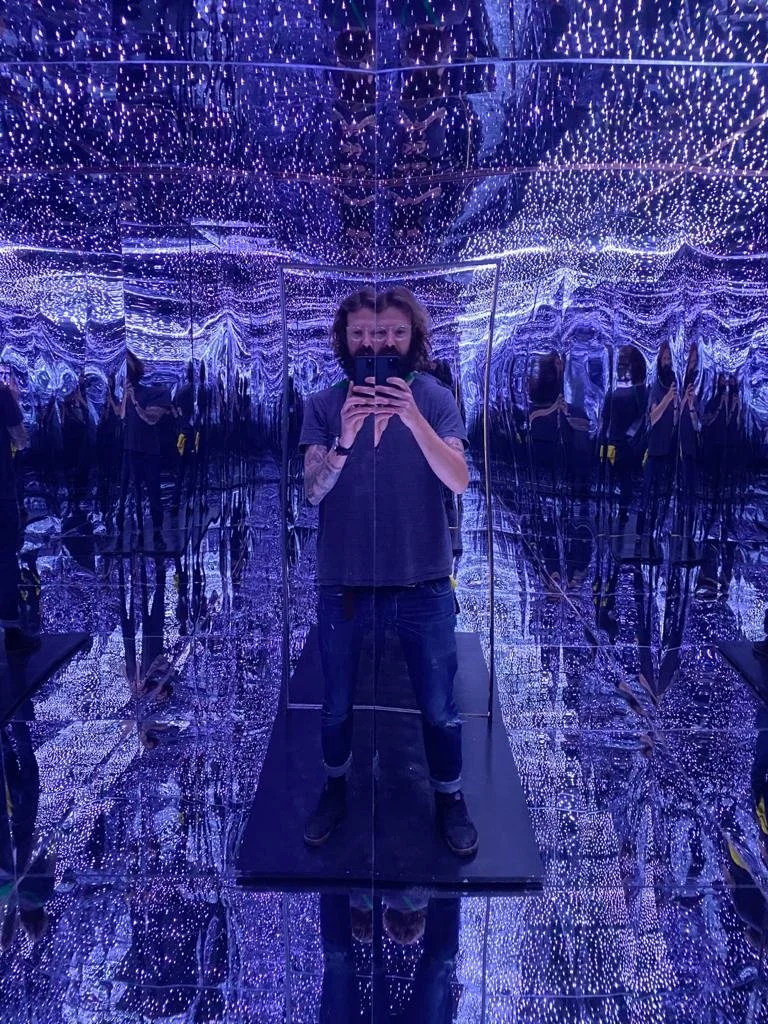
That reason is almost always spatial. A projection moment that only makes sense on video. A mirrored surface, a scale shift, a piece of tech that looks impossible until you see it move. If a visitor thinks "my team needs to see this," the phone comes out on its own. No hashtag campaign required.
A light touch helps. A visible event handle, a printed prompt at the exit, a small incentive tied to a tagged post. But the heavy lifting is done by the experience itself. If people are not filming, the design is the problem, not the marketing.
Feeding Paid Media and Sales
Event footage is the most under-used paid media asset in . It is real, it is unusual and it is genuinely yours — three things stock and studio content are not.
On LinkedIn, thought-leader ads built from event clips consistently outperform static creative on cost per qualified lead. The reason is straightforward. The viewer is not being sold to by a brand page. They are watching a peer stand inside something worth remembering.
Sales use it differently. A thirty second clip embedded in a follow-up email does what a case study PDF cannot — it lets the recipient feel the room for a moment. Deals that stall on "I need to show my team" move faster when there is something to show.
The Loop
This is where events and social media stop being two line items and start being one system. The event produces the content. The content produces demand for the next event. The next event refills the content bank.
Brands that run this loop stop measuring events on attendance alone. They measure them on the pipeline the footage produces over the following ninety days. That is the number that justifies the build, and it is the number most brands never look at because they never captured the footage in the first place.
The room and the feed are the same campaign. Design them that way from the brief, and one day in a venue quietly becomes a quarter of marketing.