Gamification at Events: How to Use Play to Win Attention and Land Your Message
Buyers can spot a pitch from across the hall. Play is how you get them to lean in — and how your message lands without a single slide.
has a reputation for being serious. Buttoned up, rational, allergic to fun. That reputation is exactly why play works so well. When everyone else is presenting, the brand that lets people play is the one that gets remembered.
The Attention Problem
Every event runs on the same currency. Attention. And attention is getting harder to win.
Buyers are busy, sceptical, and surrounded by stands all saying roughly the same thing. They have seen the demo. They have heard the pitch. They can spot a sales conversation from across the hall and steer around it.
You cannot lecture your way past that. You have to give people a reason to lean in on their own terms.
Play does that. A challenge invites participation. A leaderboard creates a reason to come back. A reward turns a passing glance into a few minutes of real engagement. And in those minutes, your message lands far more deeply than it ever would on a slide.
What Gamification Actually Is
Gamification is the use of game mechanics in non-game settings to drive behaviour.
That sounds technical. In practice it is simple. It means giving people something to do, a reason to do it, and a sense of progress or reward when they do.
It is not points and badges bolted onto a boring experience. That is the version that gives gamification a bad name. Done badly, it feels like homework with a sticker at the end.
Done well, it taps something older and stronger. People are wired to enjoy challenge, mastery, competition, and discovery. Gamification borrows that wiring and points it at your message.
Why It Works in
The instinct is to assume play is too frivolous for serious buyers. The opposite is true.
- It lowers the guard. People relax when they play. A relaxed buyer is a more open buyer.
- It creates active learning. We remember what we do far more than what we are told.
- It rewards time, not just attention. A game holds someone for minutes, not seconds.
- It makes the brand approachable. Play signals confidence, and confidence is attractive.
- It generates conversation. Scores, challenges and outcomes give people something to talk about.
In a setting where every competitor is trying to look impressive, the brand that is genuinely enjoyable stands out by feeling human.
How to Land Your Message Through Play
This is where most gamification fails. The game is fun, but it has nothing to do with the brand. People play, enjoy it, and remember the game rather than you.
The skill is in making the mechanic carry the message. The thing people learn by playing should be the exact thing you want them to understand.
A few principles.
- Make the win condition match your value. If your product is about speed, reward speed. If it is about precision, reward precision. The feeling of playing should mirror the feeling of using you.
- Build the message into the mechanics, not the decoration. A logo on a screen is decoration. A challenge that can only be solved using the insight you sell is mechanics.
- Keep it short. The best event games are loops of a minute or two. Long enough to engage, short enough to keep the queue moving and the energy high.
- Give a reason to talk afterwards. A score, a result, a personalised outcome. Something the player wants to share, which pulls a colleague in and starts the next conversation.
A Worked Example
Picture a data and analytics brand at a trade show. The traditional approach is a stand with the platform on a screen and a rep waiting to demo it. Footfall is polite and shallow.
The gamified approach turns the core value into a challenge. The brand sells the ability to find a signal in the noise faster than anyone else. So the game does exactly that.
A short interactive challenge asks players to spot the meaningful pattern hidden in a flood of fast-moving data, against the clock, on a large shared display. It takes ninety seconds. A leaderboard tracks the fastest. A small reward goes to the top scorers each hour.
Watch what happens. People stop because there is a challenge, not a pitch. They play because it is quick and competitive. They struggle, because finding the signal by eye is genuinely hard. And in that moment of struggle, the message lands without a word from the sales team. This is hard to do by hand. Our platform does it instantly.
The rep no longer opens with a cold pitch. They open with a result. Nice score. Now imagine doing that across every data set you own, in real time. The game has already made the argument.
Same stand. Same product. The play did the persuading.
Mechanics That Work at Events
You do not need a complex build. These mechanics earn engagement reliably.
- Beat the clock challenges that turn your core benefit into a timed task
- Leaderboards that create return visits and friendly competition
- Interactive quizzes that teach while they test
- Choose your path experiences where decisions reveal an insight
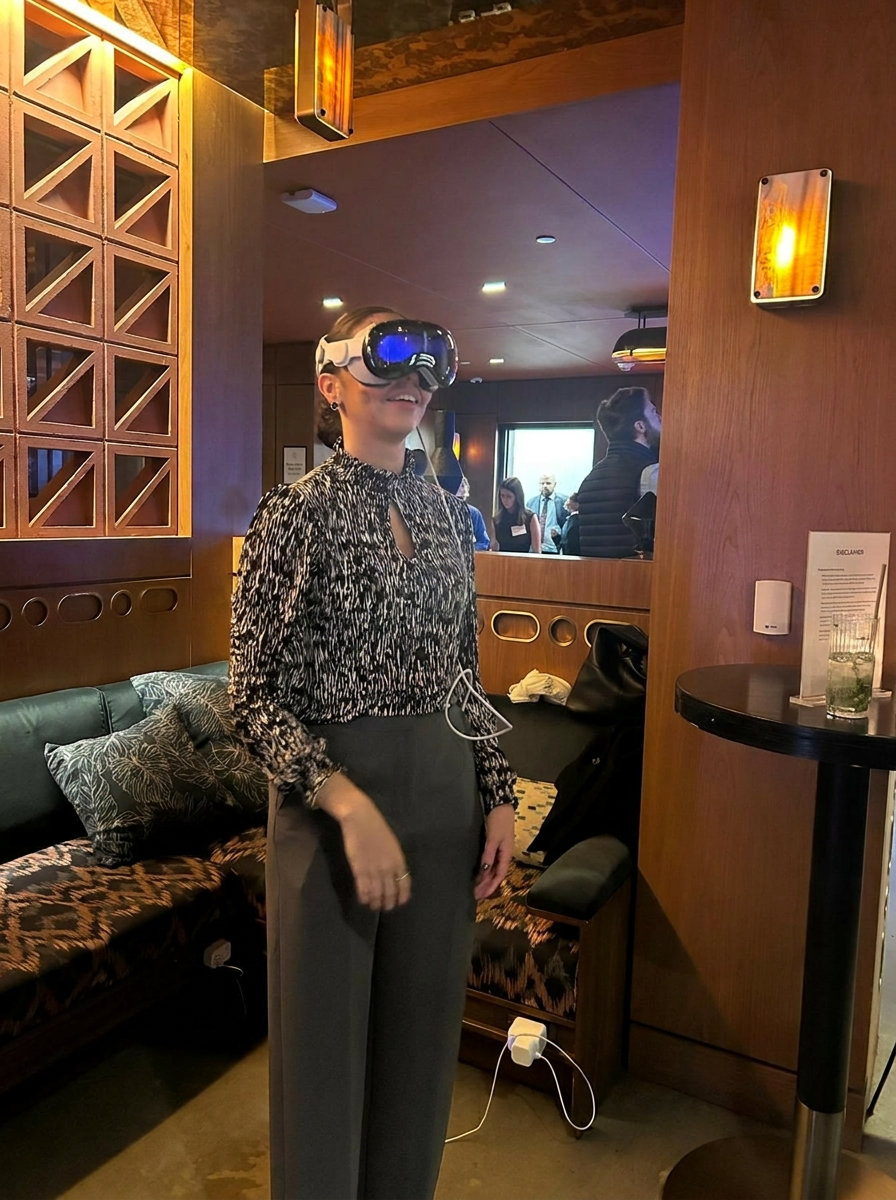
- Physical or immersive challenges that use the space, not just a screen
- Personalised outcomes that players want to share or screenshot
The right one depends on your message. The mechanic should always be chosen second, after you know exactly what you want people to feel and understand.
Where It Goes Wrong
Gamification fails for predictable reasons. Worth naming them.
- The game is fun but off message, so people remember the play and forget the brand.
- The game is too long, so a queue forms and energy drains.
- The reward is generic, so it attracts prize hunters rather than prospects.
- The whole thing feels forced, because play was added on top instead of built in from the start.
Avoid those four and you are most of the way there.
The Real Point
buying is rational on the surface and human underneath. People still choose the brands they remember, trust, and enjoyed dealing with.
Gamification works because it reaches the human underneath. It turns a passive audience into active participants. It makes your message something people discover for themselves rather than something they are told. And discovered truths are believed far more than delivered ones.
In a room full of brands talking, be the one that invites people to play. You will win the attention, and you will land the message while everyone is having too good a time to put their guard up.
Frequently Asked Questions
What is gamification in a context?
Gamification is the use of game mechanics such as challenge, competition, progress and reward in non-game settings. In it is used at events and in marketing to earn attention, encourage participation, and help an audience absorb a message through active play rather than passive listening.
Does gamification really work for serious buyers?
Yes. Play lowers the guard, creates active learning, and makes a brand more approachable. Serious buyers remember what they did far more than what they were told, which makes well-designed play more persuasive than a standard pitch.
How do you make sure a game carries the brand message?
Build the message into the mechanics rather than the decoration. The thing players learn or feel by playing should be the exact thing you want them to understand about your product. Match the win condition to your core value.
How long should an event game be?
Short. The most effective event games are loops of around one to two minutes. That is long enough to engage and create a result, but short enough to keep queues moving and energy high.
What is the most common gamification mistake?
Making a game that is fun but unrelated to the brand. People enjoy it, then remember the game instead of you. The mechanic must always be tied to the message it is meant to deliver.