Case Study: An Immersive Tunnel at Farnborough International Airshow
A fully wrapped immersive tunnel inside a Farnborough International Airshow chalet turned static hospitality into a structured supply chain story senior guests actually remembered.
Some of the best immersive activations never happen on a show floor. They happen in hospitality spaces — chalets, suites and private rooms — where a brand hosts a small number of senior guests and has a short window to make an impression that outlasts the event itself.
That was the brief at Farnborough International Airshow, where 3rd Eye designed and built a fully immersive tunnel inside a client chalet for a leading aerospace brand. Here is how the project came together, and what it teaches any team planning a high-stakes hosting moment.
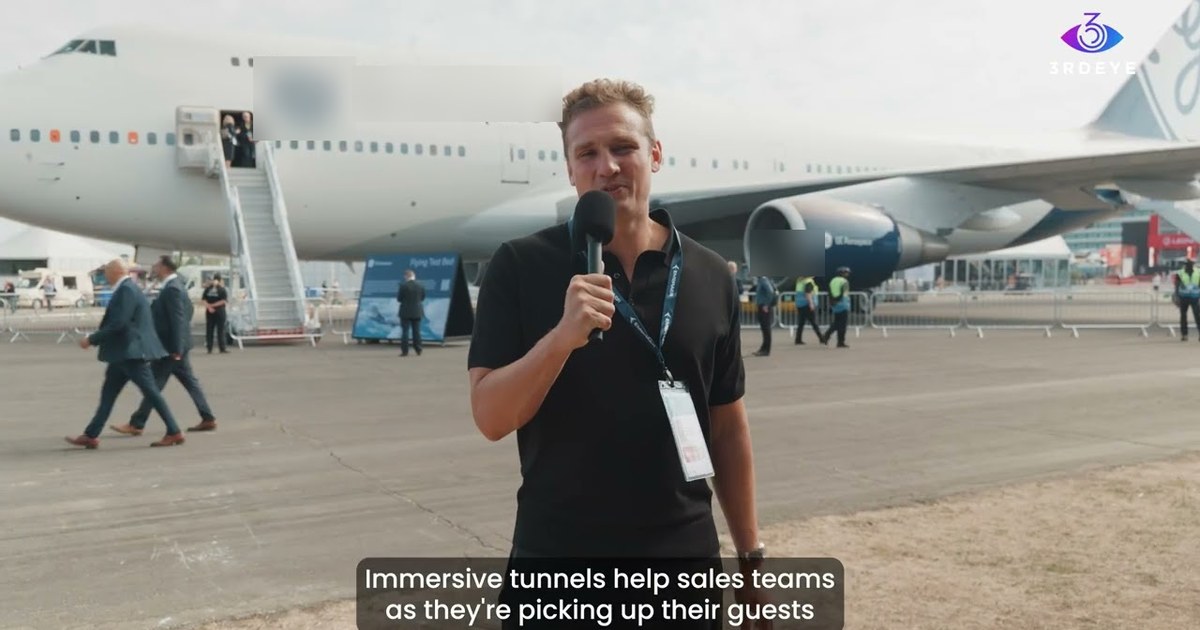
The Challenge: Static Displays Do Not Explain a Supply Chain
Chalet hospitality at a major airshow is a competitive environment. Guests move between chalets all day, every host is offering the same combination of coffee, canapés and printed brochures, and attention is the scarcest resource on the flight line.
The brand needed its guests to genuinely understand the depth and breadth of its role across the aerospace supply chain — not just recognise the name. That is a complex story to tell in a conversation that might last ten minutes, with senior people who have already sat through a dozen briefings that week.
The Solution: An Immersive Tunnel Inside the Chalet
3rd Eye designed and built an immersive tunnel inside the chalet — a fully wrapped walkthrough environment that guided visitors through the brand's capabilities across the aerospace supply chain, combining large-scale visual content with a clear, structured narrative.
Instead of asking guests to read panels or watch a screen, the space took them on a journey. Each step of the tunnel carried the story forward, so by the time guests reached the hospitality area they had already absorbed the message — and had something specific to talk about.
Why a Walkthrough Format Works in Hospitality
A tunnel is a quietly clever format for a chalet, because it works with the natural flow of a hosting moment rather than against it.
- It structures the visit. Guests physically move through the story in sequence, so the narrative order is controlled without a presenter having to lecture anyone.
- No headset required. Everyone sees the same thing at the same time, which keeps whole groups together and keeps the conversation flowing.
- It creates a private wow moment. Away from the show floor, guests relax — and a surprising environment inside a hospitality space lands harder than one more stand in a hall.
- It warms up the room. Guests arrive at the seating area already talking about what they just walked through. That is a far better starting point than small talk.
The Outcomes
The activation delivered on every measure the brand cared about:
- A standout hospitality moment inside a busy airshow environment
- Clearer understanding of the brand's supply chain expertise
- Longer, higher-quality conversations with senior industry guests
What Other Brands Can Take From This Project
The lesson here is not "build a tunnel". It is about matching the format to the moment.
- Hospitality deserves as much design attention as the stand. Your most valuable conversations may not happen on the show floor at all.
- Environment is the message. Walking through a story is remembered far longer than hearing one.
- Narrative over spectacle. The tunnel worked because it carried a structured story, not because it had lights.
See the Format in Action
The full write-up is on our case studies page. And if you are considering an immersive tunnel for an event or hospitality space, see how our immersive tunnels work — including how we partner with agencies on white-label builds.
Immersive environments like this are one of the fastest ways to turn a hosting space into a memory your guests retell for you. The brands that treat them as storytelling tools, not decoration, are the ones whose message survives the flight home.